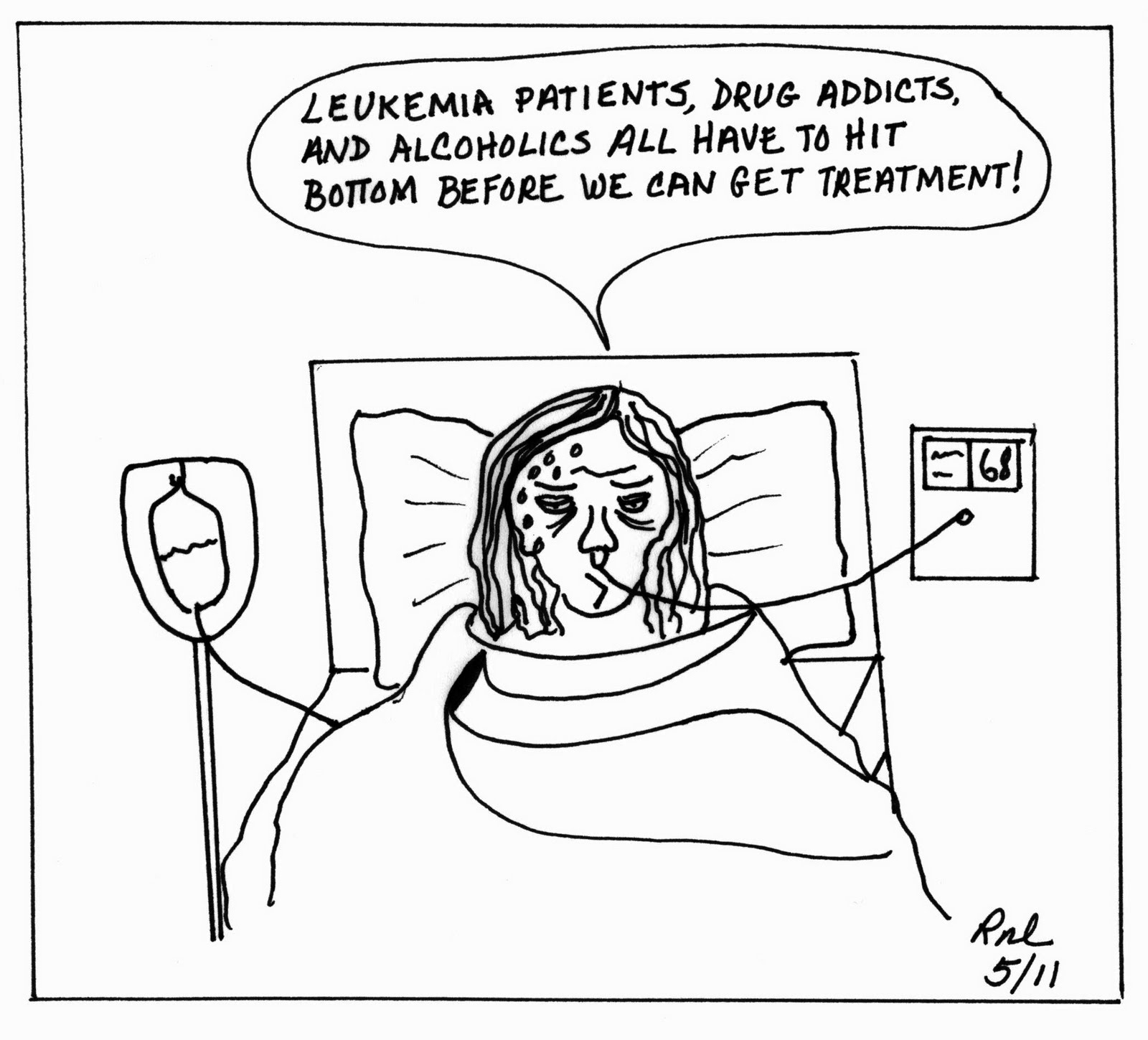
For Life Story Writers

Life stories have long, high-jumping, fast-running legs. They can heal, pass on culture and history to future generations, and set the record straight. They leap into memoirs, autobiographies, songs, poetry, visual art, satires, cartoons, novels, and fact-based fiction. If you're already writing your life stories, or planning to, I hope that my writing journeys shared here will give you ideas for where your journey can take you.


Sunday, July 17, 2011

Life with My Parrots

Besides the scratching, scurrying critters living inside the walls of my house and the little bugs flying up my nose and crawling around on the ceilings, I live with two other critters. It is my sole responsibility to keep them alive, and I do this by feeding and giving them water daily, buying food at the grocery store weekly and at the pet store monthly, and watching them for signs that they're getting sick or bleeding to death. Most days, we all talk and sing to each other; we dance together, usually, but not always, to music; and periodically I video them and take photographs of them.

Yes, they're parrots. Carmen, my female African Gray will be 19 years old in November this year--somewhat young for an African Grey that could live 60 years, and Pookie, my male cockatiel, will be 18 years old--very very old for a cockatiel!

My boyfriend Lew bought Carmen when I lived with him. She was 7 weeks old, half-grown. For several years I walked around with her standing on my shoulder drinking apple juice from a paper cup. After I moved away from Lew, he would sometimes let me take care of her when he went out of town on business trips. Lew never wanted me to teach her anything. Once while I had her, I taught her to howl like Wolf Man Jack ("OUWOOOOO Wolf Man Jack!"). A month after he returned and retrieved Carmen he said to me at work one day, "Oh by the way, what did you do to my bird?"
"What's the matter with her?" I asked.
"Nothing, but she howls like Wolf Man Jack!"


Pookie
 After I moved into my own apartment, I bought Pookie. My friend who raised birds went with me. We stood outside the pet store looking at the hanging cage full of baby cockatiels. "One of them will choose you," my friend said. None of them chose me. I had to grab a screaming Pookie and pull him out.

In 1996 Lew was preparing for his assignment in Malaysia and I was hired as a technical writer in a company up near Milwaukee and preparing to move. He couldn't take Carmen with him, but didn't want to give her to me, either, probably because I told him that once he gave her to me, I wasn't giving her back.


Pookie and I went on to Milwaukee, then to Ohio. Lew put Carmen into a bird-sitting home where she spent 1-1/2 years standing on the man's shoulder throughout the day. Lew and I both ended up back in the same Florida town at the same time. Lew had to leave town again and asked me to take care of Carmen, but he wasn't ready to let me have her for good. I hadn't seen her since leaving for Wisconsin. For me, it was a joyful reunion. For her--well, she sat in her cage burping loud rolling belches all the way home. That bird-sitting man she loved so much must have had a serious digestion problem. How many times since then I've had to explain to someone that Carmen must have indigestion, knowing full well birds don't burp, they imitate people burping! I didn't want anyone to think I burped like that.

Lew never came to pick Carmen up when he came back to town, and eventually he gave her to me for good, in exchange for my keyboard and the promise that I would teach him to play it. I had no hope for him--he couldn't even carry a tune with his voice, but he knew something about himself that I didn't know. Today he plays keyboard like a musician! The exchange was beneficial for all of us.


African Grays are supposed to have the intelligence of a 5-year-old child. I'm convinced Carmen wants me to believe she's retarded. When I first brought her home with me after her year in the bird-sitting home, she spoke in full sentences in the mornings, before she knew I was awake. She used to say, "You are sooo beeeyooteeeful," when I would hold her against my body and stroke the feathers on her head backwards. She used to help me call the dog in from the backyard with a man's whistle and a loud gutteral "HEY!" in a man's voice. And she used to say, "OH MY GOD!" Now she sings and says "WOW" and a few token words and phrases to let me know she knows what's going on. 

Parrots don't smile or have any facial expressions, and when they talk, you have to look closely to see their beaks move. 
Carmen in Ohio, 200
One night around midnight I went outside to see where the far-away crows were. I didn't know crows called at night. All was quiet. Turns out the far-away crows were inside, namely Carmen. Another night I heard a loud repeated runny-nose sniffing, like someone with a bad cold, and ran from window to window to see who might be breaking into my apartment. It was Carmen. That was the first I realized I was constantly snuffling from allergies. 

Life with Carmen has not been easy for either of us. She's tried to kill me a few times when I had the telephone in my hand. Once I screamed a werewolf movie scream into the phone when I answered the call of a man who wanted to hire me as a writer for his company. I had to hang up and clean up the blood from eight bites on both hands and down my neck and back before I called the man back and got the job. Guess he felt sorry for me, or for himself, as he had to have lost his hearing over that episode. Now I never answer the phone when she's out of the cage. She's bitten me hard enough a few times to make me seriously consider popping her in the microwave and eating her for dinner.

She's had two major surgeries on the end of her back, which nearly put all four of us (both birds, my rottie and me) out on the street. I thought she would die both times and required long hospitalizations. 


Carmen After First Surgery
Before both surgeries, she looked ready for the stewpot, having pulled out most of her feathers. She was fully feathered again until February of this year when my rottie Savannah died and she started pulling out feathers again. I think she misses Savannah always sitting in front of her cage staring at her, waiting for her to throw out bird pellets to her. Lew says Carmen needs therapy. I call her a "lyric soprano bare-chested feather-picker." 
Bare-chested feather-picker
Even though Pookie is the cutest, smartest bird I've ever known, I'm the only one who knows it. He won't sing any of his songs if someone else besides me is in the room. He and I are in a segment on "Planet's Funniest Animals." It took me three months to video it by myself. While he sits on my shoulder, I say, "Pookie, how does the rooster go?" He looks at me, then bows his head down low, raises it up high and goes, "er  er-er  er-errrr." So cute! 

Pookie taught Carmen to play peek-a-boo, and they used to play it together with each other when I wasn't in the room. Pookie isn't safe around Carmen. Once when he landed on her cage, she bloodied his feet, and another time she tried to kill Pookie when they were both sitting on different levels of a perch.

Life with birds doesn't give the same return of affection that a dog gives. Still, my parrots give me the opportunity to take care of lives besides my own, and the illusion that another human is in the house speaking in what sounds like my voice coming through a megaphone: "Wanna take a bath?" "Apple." "Carmeeena!---What!" "WOW!" And Pookie's "Eye-Eye. Eee ooo waiter" when I'm leaving the house. He can't pronounce syllables.

As I write this just before 1 a.m., an owl calls in its deep-throated voice outside my window in the live oak tree. If Carmen were in this room, she'd wake me up with owl calls in the morning. 

I found this accurate description online of the struggle to give a bird medicine through a syringe--been there, done that!

HOW TO MEDICATE A BIRD: (author unknown)

Occasionally, we find it necessary to medicate our feathered friends. Here are some pointers to help you with this task.

FIRST APPLICATION:
Retrieve the bird from the cage.
Set the bird on a table and hold its head by carefully grasping the neck where it joins the lower jaw, or mandible.
With your other hand, grasp the medicine syringe and place the tip into the left side of the bird’s mouth.
Depress the plunger and squirt the medicine toward the back of the bird’s throat.
Wipe excess medicine from the bird’s beak.
Place the bird back in the cage.

SUBSEQUENT APPLICATIONS:
Attempt to retrieve the bird from the cage.
Apply bandages as necessary to wounds on your hands and arms.
Retrieve the bird from its new hiding place under the coffee table.
Carefully immobilize the bird’s head to prevent further tissue damage to your body.
Attempt to break the “Vulcan Death Grip” and remove the bird’s feet from your hand.
Apply more bandages and a strong analgesic cream to the new wounds on your hands and arms.
Immobilize the bird by carefully wrapping it in a bath towel.
Watch in amazement as the bird “morphs.” Its head and tail will probably swap position,
putting your tender flesh in mortal danger again.
Hold the bird snugly in its terrycloth prison.
Grasp the medicine syringe.
Try to stop trembling in fear and pain.
Place the tip of the syringe into the left side of the bird’s mouth.
Ignore the crushed tip.
Depress the plunger and squirt the medicine toward the back of the bird’s throat.
Wipe excess medicine out of your eyes.
Release the bird and squirt medicine in the general vicinity of its face.
 Some medicine may actually go into the mouth.
The rest will be absorbed by osmosis.
 

Shoo the bird back to the cage.

 Spend the rest of the day attempting to regain the bird’s affection with yummy snacks and new toys.

Tuesday, July 12, 2011

When the Bough Broke

My mother didn't know that when she sang "Rock-a-bye Baby" to help me settle down at bedtime every night she was terrifying me:

Rock-a-bye baby in the treetops
When the wind blows the cradle will rock
When the bough breaks the cradle will fall
And down will come baby, cradle and all.


All I could picture was the baby in the cradle falling, and I knew first-hand the painful consequences of falling.

Last Sunday morning I awoke and realized that sometime during that night of restless sleep, the bough had broken and my cradle was falling. In this very dark place, I wrote,

"Walking into this dark tunnel of disease is taking more courage than I have. I've grown skittish over the past few years. I wear the arched, standing-up furred back of a cat that knows it's in danger. Even getting ready for a music gig feels dangerous now.

In a few days I'll bleed into a needle in preparation for my 6-month appointment with the oncologist. I expect him to tell me coldly that my lymphocyte count has multiplied, but I'm still in the "wait and watch" Stage 0 of CLL (leukemia). Night sweats, the thrush (yeast infection in my mouth), and extreme fatigue are the only symptoms right now, and still I'm peering into the unknown darkness wondering what's next. It can't be good.

Even as I go alone into the unknown of this disease, I know I'm in lockstep with a billion others on this planet who have begun their own descent, with no choice of turning back to a younger, healthier life." 

This was the Sunday I was scheduled to provide the music for Rev. Ron Fox's Center for Spiritual Living (CSL) 10 a.m. service. Trying to decide on which music to play to fit Rev. Ron's "Remaking Ourselves" topic had given me a week-long angst. I'd made the selections and practiced them through the week, but on Saturday night, I was certain the songs were the wrong choices. I spent hours going through each piece of music in four file drawers, finally deciding on a new set, and then feeling the panic that happens when I know I might not have time to adequately prepare.

On this Sunday morning, I knew that I was broken, falling helplessly like the baby in the cradle beneath blankets of issues. I had to leave my house at 8:20 a.m. to arrive at the church by 9 a.m. My mind/body doesn't obey my commands at that early hour, and singing with a tired voice is always a struggle, if not a disaster. And who wants to hear the performance of an inspirational singer who lacks inspiration? Another blanket covered the rest: the strange dilemma of ministering to a congregation through music in a church, when I can no longer, in my truth, subscribe to a belief of the existence of an invisible deity "God," and certainly not to the concept of God healing me. And now I was smothering in the thickest of all blankets--the fear for my unknown future. My integrity cradle was on the way down, with a cowardly me buried under the blankets.

I thought about calling Rev. Ron and telling him I was sick and couldn't make it. Then I thought about the disaster for a minister of having to conduct a church service without music. I arrived on time, dressed and fronting a belying smile. Rev. Ron's talk was about living life and our ability to focus and change direction. I sang the songs I'd prepared about living life. One was David Beede's song titled "Trite Secrets," the story of an old woman in the park who always sang this:

"Play like a child in the park,
Sing like no one can hear,
Sleep like you're never afraid of the dark,
Wake like there's nothing to fear
Dance like no one is lookin'
Love like you never cried,
Eat like it's always home cookin'
Work like your dreams never died"

Rev. Ron's talk was lush with encouragement for focusing and making changes in ourselves, along with quoted passages from many of my favorite authors. Afterwards (thanks to the freedom of song selections in New-Thought churches), I sang a medley of Broadway show songs in which two women make commitments to change their lives: "I Ain't Down Yet" from The Unsinkable Molly Brown and "Before the Parade Passes By" from Hello Dolly. I had a new understanding of the words as I sang them: "When the whistle blows and the cymbals crash and the sparklers light the sky, I'm gonna raise the roof! I'm gonna carry on! Give me an old trombone, give me and old baton, before the parade passes by."

The combination of Rev. Fox's talk, the music I'd chosen to sing, and the loving reception of the people there restored me to a new awareness of that balance of living the life I have while preparing for the eventuality of what is ahead.

Sunday afternoon was wonderful. I went online to the CLL support groups my sister had bookmarked for me, to try to find out what's next for this disease and found out that what's next is, as one patient expressed it, "accepting CLL and sleeping at night and not being sad, angry, afraid. Stress makes the WBC go up." Another one wrote, "I appreciate everything and everyone around me." Another one wrote, "I thank God for each day and all that it brings, good or bad." They wrote about the importance of getting exercise, eating healthy foods, having fun, and keeping up immunizations for pneumonia and flu. My doctor gave me those shots last week. Yes! Yes! Wait for me! I'm getting there! 

I was up all Sunday night, pulling out and packing up everything I don't need from all the closets, drawers, and storage areas in my house while the song played over and over in my mind "To everything (turn, turn, turn). . . .There is a season (turn, turn, turn) And a time to every purpose under the heaven. A time to be born and a time to die. . . ."  On Monday morning, by 9 a.m., my driveway was stacked four rows thick with piles of stuff that had been oppressing me, and at 1 p.m., the AMVETS truck arrived to carry it all away, minus some items the neighbors had already taken.

My storage area in the shed is neatly stacked with empty plastic file boxes and bins with lids for the day when someone will come in and pack up everything valuable. I have a new Will and Living Will, and every other important document resides in a thick black 3-ring binder with instructions and the address and phone number of the great paralegal firm here in town who can make everything happen for fraction of the cost of an attorney.

The baby is warm in the gently rocking cradle. The landing was soft. The lullaby has an ongoing happy ending: when the bough breaks, the cradle catches on a lower, stronger branch. I have plenty of time left to live a happy life in the comfort of truth and balance.  

Tuesday, July 5, 2011

Another One Walks Free

Casey Anthony's trial has kept many otherwise productive Americans catatonic in front of their TV screens, hoping to learn in the proceedings how Casey's little girl died and who was responsible for her death.

This whole saga reminds me of my conversations with my father after he raped my retarded, autistic stepsister Denise (in her early twenties) five nights in a row. He was home alone with her while my stepmother was in the hospital undergoing tests for spots on her lungs. 

After several months of bizarre behavior, including an attempt to choke another student in the vocational school she was attending, Denise, who could not speak coherently, finally acted out the ugly scenes for her mother. The evidence was in underwear on the floor of Denise's closet and in her erratic, violent behavior, and in the sentences in my father's daily journal on those days, in his handwriting.

I carry the blame for what happened to her. My husband Whitey and I, musicians on the road with our Vegas-style showband, happened to have that week off in between bookings and had come back to Canton to see our families. I knew my stepmother was in the hospital. I knew my brain-injured father, lacking impulse control, was alone in his house with Denise. A strong inner voice told me that Whitey and I should be staying there with them. Instead, we stayed in a nearby motel. 

Every day my father drove Denise, Whitey and me to the hospital to visit my stepmother. I noticed Denise walking in a way she'd never walked before: bent over from the waist with her hands hanging an inch above the sidewalk in front of her feet. I kept nagging at her to stand up straight. She laughed an embarrassed laugh and stood upright for a few seconds before bending over again.

One day on the drive to the hospital, with Denise in the front seat and Whitey and me in the backseat, my father told us that Denise was "coming on" to him, and he was taking advantage of it. Whitey stiffened up, tightened his mouth, looked straight ahead. I knew his strong convictions against interfering in others' lives. My own years of abuse and incest from my father were still locked away in my own closet of demons. Neither Whitey nor I responded to my father's admission.

My stepmother finally told me about her daughter's rapes a year later, after Denise was already fortressing herself in her upstairs room with everything she could drag and carry from everywhere in the house. My father was still living in the house as though nothing had happened. Denise was already hitting and punching her mother and flying over the dinner table on top of my father toppling him backward onto the floor, screaming, "Why you do that, Daddy Bill?" 

I begged my stepmother to press charges and prosecute my father. I promised I'd help her send him to prison. The only action she took was to move him to the upstairs bedroom opposite Denise's bedroom.

During later visits, I asked my father questions. "Did you rape Denise?"
"Only God and I know that," he replied.
"Are you going to rape her again?"
"I don't know that. You don't know that. No one knows that."
I can still see his blank face and his wide eyes staring at me.

Donahue changed my life one early morning in Minneapolis. His cable show was aired on TV at 1 a.m.  Our band members were gathered in Whitey's and my Holiday Inn room after a night's performance in the nightclub, as we prepared to go out for our routine early-morning "breakfast." 

I was sitting at the end of the bed half-watching Donahue's show on TV. Donahue was interviewing a woman sitting alone in the spotlight. Her parents were up above in the shadows to protect their identities. The woman talked about the impact of incest on her throughout her life, about standing against the closet door full of her anger to hold it shut while the anger seeped out through the cracks around the door. 

I started paying attention. Her story was my story! Every detail she described was my experience, my acting out, my secret pain. Yes! I was an incest victim, too, and I thought I'd escaped it unharmed. In the end, the woman had written a book, and in a final dramatic moment when she revealed that she was a lesbian, the audience gasped. 

Donahue's show was over, but my show had begun, and I was alone in the spotlight of sudden, sickening awareness of the ways I'd acted out my anger and outrage for so many years. When I stood up to leave with the others, I felt dizzy and sick at my stomach. I told Whitey and the other band members to go to breakfast without me, but Whitey sent the others on and stayed with me. I cried loud, angry tears. I had wanted my stepmother to send my father to prison, not for Denise, but for me. A light had turned on in me that would alter the course of my life.

Whitey and I returned to Canton together a few times after we knew about Denise. On one of the visits, Whitey teased me afterwards about getting the "Nasty Child Award for the Day" when I calmly asked my father to move out of that home. He had already fathered a baby daughter with his girlfriend in another relationship. A week later he moved in with them.

I needed counseling. Whitey and I dissolved our band and settled in Colorado Springs. We performed as a duo act for a year. He was already a professional pilot and instructor, so he got a job with a small flight operation. I started seeing a psychologist. Several years later, he and I separated, and I went back on the road as a single act.

After five years, in the final days before the deadline when criminal prosecution would no longer be permitted, my stepmother retained an attorney and pressed charges against my father.

A Grand Jury judge decided that the criminal case would not go to trial. The judge was "corrupt," according to the attorney who handled the civil case several years later. My father wrote to me, "Thank goodness for our justice system!" 

Over my years performing alone on the road, I returned to Canton to visit my stepmother. One day the neighbor answered the door when I knocked. I could hear my stepmother wailing in the living room. Her leg was elevated on a footstool, her ankle was swollen, and her cheek was ripped open. Denise had attacked her and had been taken in a straight jacket to the hospital's mental unit. My stepmother's other daughters were urging her to put Denise in a home, but my mother would not even consider that. Denise was hers.

On one of my Canton visits, I met my father in a restaurant.
"You raped Denise, didn't you?" I said.
 "That's between me and God," he answered, his face blank, his eyes wide and staring. 

I pictured myself standing up and turning the table upside down, crashing the chairs against the floor until they broke into small pieces, racing over to the windows and jerking down the curtains. Instead, I quietly told him that I would never see him again. His dishonesty was too upsetting. He said, "That's okay. I understand. I can get along fine without you."

I saw him again six years later, when I returned to Canton to testify against him in a civil court case on Denise's behalf. My father represented himself and cross-examined me. A few weeks later, we received notice that the jury found him guilty. He was bankrupt. My father would never pay for his crime. 

He wouldn't allow his wife to be present at the trial. I was on good terms with her, and on this day, I wanted her to know that my father was guilty, that he was a predator and a pedofile, and if she didn't protect her ten-year-old daughter, my father would harm her, too. After the trial, I went to their home. They sat across the table from me, and for two hours, we had it out. To write what happened would take several books, but in the end, she told me she believed me and would protect her daughter.

In the months that followed my father's trial, I noticed that I was calmer and my anger had subsided. My visits back to Canton revealed healing of the relationship between Denise and my stepmother. What helped us was to know that others agreed that what my father had done was wrong.

I've averaged an hour a day watching Casey Anthony's blank face and large staring eyes and listening to the testimony. I've watched the trial re-runs and commentary on the news. The public doesn't know what happened to her little girl. The jury doesn't know. Casey knows. Now she walks free-- like O.J. Simpson walked free. 

Not knowing the truth about what happened when the person sitting there knows sends us all into a collective boil. This trial has taken us back to other times when others inside blank faces and large eyes lied to us. 

Ultimately, it takes us back into our own everyday lies to ourselves and others. We make up excuses for not doing things we don't really want to do. We withhold information. We blame others for our shortcomings. We make up justifications for our actions and hide our true feelings from ourselves. This trial and its abrupt ending forces us to ask ourselves the question: Who am I really mad at?


Sunday, July 3, 2011

Before You Think You're Ready, Write and Publish!

If you're a writer with a lifetime of written works, published or unpublished, readers with those cute little electronic tablets are waiting for you--all over the world! Don't be like me and wait until the eleventh hour of your life to round up your writing and get your stuff published into e-books, audiobooks, and even hard copies of books for book signing events.
 
If you're a writer with a brain full of ideas for novels, short stories, and true-life stories, start writing! For a small outlay, you can get them published in e-books and get them online to all the places where readers look for books.
 
Even this blog that you're reading right now will one day be an e-book, an autobiography of sorts!  I plan to call it Search for Myself. I think that's what our entire life's journey is all about.

Tips for Getting Ready to Publish

When you've finished writing a book, get it ready to publish by taking these steps:
  • Find an editor--not just a friend, but a person with a formal education and a strong background in English who can read for logical content, sentence mechanics, grammar, and punctuation. Even the best writers need editors! Readers don't like to find spelling and grammar errors when they're reading a book.
  • Ask your editor to help you find a proofreader to give your book a final read-through. The editor who has already spent hours working with your book may not be the best proofreader. 
  • Decide if you're going to target your how-to book or story for the enhanced electronic readers or just for the standard electronic reader. If you haven't already, go to Barnes & Noble and ask for a demonstration of their electronic reader, the Nook. They have a standard reader that shows just B&W text, and they have a new enhanced model out, the NookColor. An author can add music, videos, color photos and even animations to the e-book for the enhanced version. The NookColor is hard to pass up! You might want to add in music and pictures for future readers with fancy gadgets! 
  • Decide how you want your book cover to look and gather photos for it, if you decide to have them. Look up the standards for a professional book cover. How should it look in order to sell well? Then you can judge whether the graphic artist creates a cover that meets those standards.

E-Book Formatting/Publishing/Distributing Companies

Decide whether you will format your e-book yourself or send it off to a company for formatting. BookBaby's ads (see more below) say that they will help you format your own book if you go with their company. That might imply that they will not do the job for you, but give you the directions for doing it yourself. Listed below are some options for formatting and distributing your e-book: 
Amazon
  
Amazon.com has guidelines for formatting an e-book for their Kindle reader. My new Facebook friend, Allen Applen, has written e-books, formatted for Kindle and sold on the Amazon site. 

He wrote that his understanding is that readers with the Barnes and Noble's "Nook" can also access and read a book formatted for Kindle.

For more information,  go to this site:


Then click on "Community" and then go down to "Voice of Author/Publisher" Allen writes, 'Whenever I have a question I ask and someone answers."

The Cadence Group 


This is a professional design, editorial, sales, marketing, and project management provider for the book and publishing industry. They select only projects that have strong market potential. Check out this web site for what is involved in publishing and marketing a book.

Smashwords   


This is a free service that will format your e-book, give it an ISBN number, and distribute it in the required format to each of the major retailers online. You submit your book in Microsoft Word. You will earn 60% from major retailers; 85% for each download from the Smashwords site.

BookBaby   


They will format your e-book, and they'll distribute it in the required format to each of the major retailers online. (On their ads, they say they will "help you" format your book.) You submit your book in Microsoft Word. You will pay up front for their services, including the cover and ISBN number, but you will earn 100% of the sales. Charge for formatting and distribution is $99. BookBaby will not show you your book formatting, because they say it looks different depending on what device it’s being displayed.

Publishgreen 


They will format your e-book and distribute it in the required format to each of more than 28 major e-book retailers online. You submit your book in Microsoft Word. You will pay up front for their services—$400-$1000.  You will keep “up to 100%” of the sales.

Evergreen says they will format your book by hand, and not “smash” the words together like the other ebook companies. They say “smashed” books are "ugly books." You can download sample e-books on their site to see.

CD Duplication Companies (for audiobooks & music) 

If you're going to write a book and you have a budget that allows for it, why not also record your story? You can record in your own home if you have recording software, or a Mac. You can also buy studio time, or trade services with a recording studio owner. You can duplicate your tracks into CDs (Short run! No one needs 1,000 copies piled up in the basement!) for selling at events, and CDBaby will distribute your audiobook online to all of the places where readers can download it. Here are the links:


You will also need a marketing plan in place. Facebook is not the only answer. You'll have to accumulate a great e-mail list and write on all of the social networking sites. There is a lot of marketing how-to information online.

It's Time!

Robert Fritz, in his book Creating writes that the time to begin creating is before you think you're ready.

Get busy and write the Great American Novel. Dash off a self-help book if you have information about a subject or a skill to teach. Write your life. You know it's a good story! I'll read it--as soon as I publish my stuff. 

My first priority: e-book and audiobook titled Life with a Buckskinner--my memoir and published stories about my husband Whitey and me in the 1970's-80's. My sister giggled through all of the stories while I recorded them last week. Maybe other listeners and readers will, too.

Mountain Man Whitey on his horse King


Saturday, July 2, 2011

Sister Knows Best

I wish I could report that my sister Margo is still here in Florida with me, but yesterday morning when I woke up, I knew it would be the sad day when I would drive her to the Orlando airport for her flight back to Maryland, back to her husband who has missed her terribly and who adores her and needs her as much as I do. I appreciate his support for her visit with me, and for accepting her eight-day visit, which included a three-day extension. 

When she arrived here, my life was a mess. My walls were covered with outdated pages and notes about my projects, and the surfaces of desks and tables were covered with stacks of papers--pieces of paper with cartoons and notes, how-to information, pamphlets, advertisements for services, stories from my past, and spiral notebooks I've crammed full of random notes.

My projects I'm struggling to get into forms for release to the world include four books to become e-books and soft cover books (one in the form of a life writer's workbook), an audiobook, a mountain of cartoons, and a dozen songs I've written that need to be recorded and released both for online download and as CDs. 

Every step in each of these projects is like quicksand--there's so much to learn and figure out, and the learning curves for each decision and mastery of each skill are steep. At first, Margo was diving into the various project tasks like I've been doing--"Let's do this now." "Now let's do that." "Oh here's this to do!" 

First we were at the computer looking up information for one project, which led us to the coffee table and a stack of papers where we searched for something needed for another project, and then to the bookshelf to find a book needed for another project. 

I could hear her Geiger-counter mind ticking faster as the confusion built up into toxic stress and she saw me hyperventilating, moving into the panic/overwhelm mode I go into when I'm too tired to make the smallest decision. 

Nearly 3-1/2 years younger than I and in good health, in other words, still able to adapt, Margo changed her approach, something I haven't been able to do for myself. Here is what she did for me:
  • She helped me get all of my projects organized, with steps lined up for each, wrote them down on structural tension charts, and taped them on the walls in place of the outdated pages. 
  • She designated shelves and drawers and labeled folders where I can place each piece of paper so I'm not spending all of my time searching for it. 
  • She helped me record 6 of my 9 stories for the audiobook, clicking the software on and off and writing notes while I recorded. Her notes allowed me to quickly edited out the mistakes in the track for each story. 
  • She went to the doctor with me and listened when he diagnosed me with thrush, linking it to leukemia.
  • She went online and found the CLL support groups. 
  • She listened non-judgmentally while I told her my political and religious beliefs, and then she shared her thoughts that were in common with mine.
  • At her insistence, we went to the bookstore and looked for cartoon markets.
  • She stayed patient, cheerful and energetic throughout the long days, and continued to nudge me forward, past 2 a.m. on some nights.
Margo thinks and creates like I do. During her work on her Ph.D. in music, she introduced me to the work of Robert Fritz who has studied the process of creating and teaches others how to create using his concept of "structural tension." Fritz has written a number of books, which she and I both have read, including Creating, Your Life as Art, and his international best-seller, Path of Least Resistance

In August 2001, after attending one of Fritz's week-long seminars, she came alone to Florida to visit me, for the first time ever, to share what she had learned. As she described the events that took place at the seminar and what Fritz taught, I understood that I didn't need to drown in my bipolar disease. We all have shouting, mean-spirited voices, permanent residents in our heads, calling us names and making up lies. I could shake hands with them and step over them to create a new life for myself. I was 56 years old, living alone on Social Security Disability, with a history of several hospitalizations and multiple suicide attempts. Her gift to me changed my life.

A few years later, we both attended Fritz's workshop where he taught an international group of attendees to teach his course, "Creating Your Life."

On this June visit, Margo is probably the only one who could have asked me the right questions, identify what has been blocking me, and help me finish some of the tasks and line up others to move me forward to completing my projects. I trust her and accept her as an authority and a mentor. Last October when Margo and her husband gave me their car, I did what our mother often did--I accidentally called Margo "Mother." That says it all!

Margo Ready for Lunch, June 2011
I tried to make Margo's visit enjoyable and memorable, too. I cooked nutritious meals for her (or we ate out) three times a day. I gave her a Starbuck's gift card and the car keys so she could go down the street for good coffee. I took her to my English country dancing group for a night of dancing with 20+ other men and women. She was very good at it!  (I'm not! I can't remember the routines for each dance.) She facilitated a dulcimer group workshop one night, and they shared their music and ideas with her. I also arranged for my massage therapist voice student to give Margo the first professional massage she's ever had. She loved that experience.

We shared our music, sang together, and worked on arrangements. There wasn't time for recording them. I hope when she comes back next year I'll still be able to sing. One challenge with singing when tired is those little part-muscle vocal chords won't cooperate.

One big surprise to me is that Margo is the gifted artist of the two of us! That shouldn't have been a surprise. She had the artist talent when we were children. I've worked hard to draw my cartoons. For her, with a few quick pen strokes, the picture materializes. She left this drawing propped up on the pillow yesterday. She's on the left.

She and I both agreed that so far we've avoided falling into the family dementia disease. Our judgment is based on our belief that we're not yet repeating statements and questions. I call it our "belief" because we could both be so far into dementia, we don't remember that the other has repeated something. Still, I find the belief comforting.

In spite of increasing fatigue and other developing problems, I'm optimistic that my descent into CLL (chronic lymphocytic leukemia) will be gradual enough that I'll have the time necessary to complete my projects. 

Today, I'm much calmer as I look at the structural tension charts listing the tasks and due dates taped to the walls and the materials lying neatly on shelves. I know the priorities and logistics for all of the projects. I also know the established place to put each piece of paper when I get to it in the piles of papers still heaped on tables and desks. Life is good!

My sister knows that what's best for me is steady, confident guidance. I'm sure I'll get along on my own until she returns for next summer's visit to rescue me from some other life drama.

Wednesday, June 22, 2011

When Sister Visits

My sister comes to visit me tomorrow at my home in Florida. I'm excited! I've been cleaning house, washing clothes, cooking some meals, and getting the car she gave me serviced and washed. We'll have fun if I can manage to keep my behavior acceptable to her.

She's a gifted elementary school music teacher and accomplished pianist with a Ph.D. in music, and lives in Maryland in a sturdy brick house on acres of land with her life-time husband. She also lives close to her two talented sons and their talented, exceptional families. She has five grandchildren ranging in age from elementary through high school, some of whom she taught to play the piano, beginning them at early ages. Now they're becoming accomplished musicians on other instruments. One could say my sister has lived a successful life, and I'm immensely proud of her!

I, in contrast to her, am bipolar, childless, thrice-divorced, and live alone in a mobile home (at least until a hurricane or tornado knocks it down) on a Social Security check, Medicare, and food stamps. However, I, too, have been successful--I've successfully remained alive for more than six decades in spite of my efforts to die while still resident in my youthful face and figure. I long-ago outlived that possibility!

I went off my bipolar meds in 2001. It just seemed to be the right thing to do. I believe I'm not in the terrible mental anguish I used to be in before diagnosis and during the 16 years I was on every medication out there to stabilize me. 

In fact, I've been sure that I was somehow miraculously healed of this noxious affliction and that I wake up every day feeling and behaving consistently and predictably. Recently, two of my friends who see me frequently have informed me that I'm wrong. They they never know who I will be from one time to the next.  Some days, one of my friends said, I'm "higher than a kite" and never stop talking. Other days I'm so depressed I "can hardly get a word out." Hmm. Really?  Okay. But I haven't been altogether wrong. I do feel and behave consistently and predictably like myself, from my internal view. But my poor friends!  How can anyone put up with me? 

Well, my sister can't. When I came home from college for visits, all excited to see my sister and mother, and with so much to tell them, I could see them roll their eyes at each other after only two hours of my non-stop talking.

My sister avoided me altogether for many years. Sometimes she'd magically pop back into my life for a month or so in phone conversations, maybe just to see if I'd changed stripes to spots, and then the phone calls would stop and she'd be gone. Perhaps I'd crossed her lines again.  

I lived in the same town as Mother for years, but when my sister came to visit Mother, she was very clear that I was unwelcome to join the visits, and often I didn't know she and her family were in town. Then suddenly, after not seeing her for ten years, her family came to town and wanted to come to the restaurant where I was performing music, to see me and be with me. And they did.

When our mother was dying, my sister flew down to stay at the Hospice House with Mother.  I went into a rant one day about how the doctors in the hospital had killed Mother, and my sister begged me to "take a pill." I believed at the time that she couldn't stand my behavior and wanted me to shut up. I wanted to accommodate her and wondered which pills I had that would transform me into someone she could tolerate. I had only Zanax and Klonopin, and a small dose of either makes me go to sleep. So did my sister just want me to go to bed and sleep the rest of the week? I didn't take a pill or stop talking.

Many of our famous political leaders and activists talked and wrote a lot. John Adams did. It's said he wrote all over the margins of his books as he read them, like I do--a dialogue with the author, of course! It's said Winston Churchill was bipolar and a drinker. And have you read Mark Twain recently? His new autobiography, Volume I, is out. It's 700 pages long, with two more volumes to be published in the next few years! 

When my sister visits, I'm pretty clear on her rules. She will share very few, if any, of her personal thoughts, feelings, or ideas about what she believes or what's going on in her relationships, and she doesn't want to hear mine, either. I'm also not to talk about politics or religion. I think she believes she's a "capitalist," and a Christian, and she doesn't want to hear anything from me, who she believes is an atheist and a "socialist." I would correct her impression and say that I'm comfortable with the mysteries of life without needing to cling to any belief to explain them, and I'm a "populist."

Somehow I can circumvent all of her rules when I shift into what I call my comic strip personality, where every idea has a punchline that makes her laugh. Yep. I know how to make her laugh. We're sisters! We share the same sense of humor. We have the same voices when we talk, many of the same mannerisms in facial expressions, and we can sing together, too--and share our new songs and creative ideas with each other. And she's fun to cook for. She likes my salmon patties. 

I need her to help me organize my projects (four books and another album of original songs) during the five days she's here. And she can help me make decisions about organizing and disposing of my belongings. I'm sure she doesn't want to come in here and try to make decisions about all of my keepsakes when I die.

This is my sister's first visit to Mother's house since I've been living in it. My dark mind believes everyone, human and non human, dies while living in this house, including Mother, her husband, and recently my dog Savannah. When I first moved in here, a neighbor told me in a whisper that this mobile home community is nicknamed "The Lord's Waiting Room." He was right. Handfuls of people residing here die every month.

I want to hang a welcome sign on the entrance door for my sister: "Welcome to the House of Death in The Lord's Waiting Room. Enter at your own risk." I wonder if she shares that part of my sense of humor.

I'm ready to leave this life now, but not until I get my lifetime of creative work out into the world. I'd also like to know what my sister hides from me about herself, and I'd like to be acceptable to her, and even loved by her, for myself, not as someone she has to control in order to be able to tolerate. I believe that I am more than my behavior, more than just a walking poster-adult for bipolar disorder. My wishes all might take longer to fulfill than time I have left on this planet. So be it. For now, my sister and I can share laughter and music. That's more than enough!


Monday, June 20, 2011

Real Life in Everyday Moments

I see a news report on America's involvement in Libya and Mr. Obama's refusal to follow his legal community's recommendations to ask Congress for permission, and I remember my years passionately protesting the Vietnam War. I support the congressmembers who sued Mr. Obama.

I watch and listen to Rachel Maddow making us aware of how so many states are circumventing the Roe vs. Wade ruling and shutting down women's options for abortion, and I remember when I became unintentionally pregnant and almost died from an underground abortion performed by a 90-year-old man living in a row house in the slums of a city, before abortions were legal. I'm afraid for women who become unintentionally pregnant and can't find a safe way to terminate their pregnancies.

My African Grey Carmen fluffs her wings, lifts one foot high in the air, and bobs her head up and down as we dance in the living room to music tracks on Lance and Huguette's latest CD, and I remember my years of friendship with those two wonderful Canadian entertainers who perform winters in Florida as a duo. I miss them and wish them well.

And while laughing at Carmen's version of dancing, I remember the day I screamed one of those werewolf-victim-horror-movie screams into the receiver and dropped the phone a second after I answered a potential employer's phone call while Carmen was perched on my other hand. She flew for the phone I was holding to my ear and sank her beak deeply into my neck and down my back in eight places, bloodying my hand as I tried to pry her off my back. I managed to pick up the phone and tell the employer I'd call him back in a few minutes after I stopped the bleeding. Carmen had bitten me a fraction of an inch next to my jugular vein. I stopped the bleeding. The caller's eardrum was likely split, but he hired me as an editor in his company anyway. I'm grateful for the times Carmen makes me laugh, and I NEVER pick up a telephone or the TV remote control when she is not safely bolted inside her cage!

I work with my voice student and comfort her when she gets frustrated and cries, remembering the college years when I ran out of the room crying during my weekly voice lessons with my 70-year-old Hungarian opera star teacher, Lilly Justus. I wonder if I'm a strict, focused, exacting teacher like Justus, demanding the utmost effort from my students, but never letting them know it's okay to not be able to get there--yet.

I learn that my first husband has died, and just when I start to feel sad and remember how deeply I loved him, I remember how he lied under oath to the Catholic priests on a statement he signed in order to get our marriage annulled in the Catholic Church so he could marry a girl from a strict Catholic family. The marriage was annulled, but his false testimony could have sent me to prison. I'll write that story sometime, and for this moment, I'll balance my memories in that gully of disparity between my adoration of him and my anger and disappointment, mostly (now I know) at myself for my consent to his abuses. 

I think about drinking an alcoholic beverage to soothe emotional pain, and I remember the last time I drank twenty years ago. I was taking Lithium prescribed for my bipolar disorder and got alcohol poisoning. Certain that I would die any moment, I crawled on my hands and knees to my bed and climbed onto it while the man I loved stood over me furiously shouting every curse word and insult in his military vocabulary and calling me every filthy name he could think of. For this moment, I'm keepin' that memory green, and I refuse to drink any alcoholic beverage.

My friend who is on a cross-country road trip calls and tells me the antibiotics she's on for a sinus infection aren't working, and I remember my years on the road with my band when one (or more) of us got sick and went to hospital emergency rooms for medical care. Now there are walk-in clinics. I tell her it's okay to stop in a city and find one of those and spend a few hours waiting to see the doctor to get a prescription for a different antibiotic. One's health always comes first, I've learned.

My human mind is always scanning the landscape of present and past and galloping off into fantasy, possibility, and imagination. Controlling my mind to "not think" about or submerge negative or painful events takes too much energy, but I try always to be mindful of my thoughts and to sort out imagination and fantasy from reality so I can choose which ones I will focus on and act on.

Mistakes and life experiences are our teachers, and experiencing every rich blessing in the moment calls out imagination, memory, and associated meanings and emotions.

Kahlil Gibran writes in "The Prophet, "The deeper that sorrow carves into your being, the more joy you can contain. Is not the cup that holds your wine the very cup that was burned in the potter's oven?"

For this moment, I will give myself permission to be totally human and revel in my joyful kangaroo mind as it turns cartwheels and leaps now into the present moment, now into imagination, and now into the past years of my rich, fully-lived life, without boundaries or limitations.

Letting my mind loose to wander can cause a public relations problem. Yesterday wasn't the first time a good friend has said, "Renelle, you think too much!"  

Saturday, June 18, 2011

Remembering Savannah

Savannah's charisma must have been partly her shiny black coat and partly her jaunty trot with the way her head moved fluidly from the left to the right and back to the left so as not to miss anything. She was the canine equivalent of a Tennessee Walking Horse. She was more popular than I was! Strangers stopped and got out of their cars in the middle of streets to come over to pet her. Neighbors invited her into their yards to play with their dogs. She was used to cars stopping beside us on our walks and the head leaning out the window and looking down at her and saying, "Hello, Savannah." She walked straight to the window and raised her head to acknowledge the greeter. I never minded being invisible when I was with her. Anyone who showed love to my dog was showing love to me.

Savanna and Me
It's been nearly four months since my beloved rottie Savannah died. I've been wishing I were a computer that could be reset back to a previous date. I would go back in time to the years when Savannah walked at a proud, spirited trot, without a limp showing pain; before the growths started lumping up inside her body; when she could hold her own in rough play with other neighborhood large breeds. 

I wish I could reset to before all the times I let her down, beginning with the first minute I brought her home from the shelter in the front seat of my mini-compact car, with her body falling in folds onto the floor, with no space where it could fit all together, and her head, neck and chest cramming into the space between my legs and the steering wheel, making steering the car almost impossible. All I could do was to keep shoving her in sections over to the other seat and hope we'd make it home. She just wasn't a front-seat dog!

I got her in November of 2001, after I'd been robbed on THE 9/11, and a few weeks after I'd had a hysterectomy. My music equipment was stolen on that 9/11 day, and I was unable to make it to my gig at the restaurant that night. The police told me to get a motion sensor that barked like a big dog to protect myself. I decided it was time again to get a real dog for a companion, but a large one.

Olivia went with me to the shelter on the first day
The woman at the animal shelter talked to me about what I wanted and then brought Savannah out to me in the yard where I could get acquainted with her. The woman told me she rescued and bred rottweilers, and this sweet-natured rottie of sterling quality was perfect for me. The shelter had named her "Savannah." Animal rescue had found her only the week before walking along a major highway with only a choker chain around her neck. 

I'd always had long-haired dogs, most of them cute little wiffy-wuffies with shoe-button noses, and as I looked at Savannah's short black fur and eyes wide apart, I wondered if I could ever learn to love her. We walked slowly together, while the shelter volunteer gave me tips on how to take care of her. To praise her, I was to simply pat her on her wide chest. Before I left, dog and I looked at each other and she moved towards me and gave me a faint lick on my face. I went home that afternoon without her. The next day, I went back with photos of my backyard to prove it was fenced all the way around, and adopted Savannah.

The shelter workers assured me that she had been thoroughly checked over by a veterinarian and judged to be healthy, but when I got her home and observed her, something told me she was very sick. My own vet discovered that she had the bacteria in her body that dogs get from drinking stagnant water, and she had a large tumor that had grown from some tissue left from a time when she'd been spayed.

I called the animal shelter, and they told me they believed Savannah would have a good home with me, and agreed to pay the bill. My friend Norm and I took Savannah to the vet hospital for her surgery and brought her back home that night. Norm and I will both remember that night forever. We had laid Savannah on the floor of the backseat, but when we got home, she was in too much pain to get herself up, or to let us move her. We couldn't get her out of the car. It was after dark, and cold. I covered her with a blanket and left her there. About 30 minutes later, we looked out and saw her sitting up in the backseat, ready to join us in the house.

The vet believed Savannah was five years old, but based on her energy, I guessed that she was more likely two or three. Her temperament was sweet, and I had no doubt she had only been loved by her previous owner. A few weeks after her surgery, a new obedience training class was starting, for a nominal fee, and even though Savannah and I were still recovering from our surgeries, I believed it was time for us to get trained. She was a 75-pound full-grown dog, and I knew I would have to be able to speak a command to her. Moving her physically would not be an option.

The class was held in a very large room, with 50 other dogs and twice that number of people. The trainer stood in the middle of the floor speaking a microphone that projected through a booming speaker system, and she yelled at me constantly throughout the two very long hours: "Renelle, make your dog sit up." "Renelle, don't let that rottie get near that little dog!" "Renelle, watch your dog!" It's no wonder. Instead of sitting, Savannah was lying down. Instead of standing, she was dragging me all over the room, trying to herd all the dogs and all of the people into her own pack. Both of us were exhausted before the class was halfway over.

I vowed not to go back the following week. My name being shouted through the speakers was still ringing in my ears--it was all too humiliating. But the day before the next training session, I remembered my psychiatrist had given me Zanax to take for my newest diagnosis of "social anxiety disorder." I was only taking a tiny .25 mg. just before I had to attend a social event, which wasn't very often, but the medicine worked. I decided to take that same dose on the nights before the training sessions. The trainer continued to yell at me and no one else through the 10 weeks, but on the medication, I wasn't bothered. 

Joanne Priaulx with Savannah
Although Savannah and I graduated, I don't think visitors who came to our home believed we had our diploma. Savannah was always playful and had to be the center of attention. Rotties are herders, and she was the best! She sat on a visitor's feet, leaning against him or her, always between the visitor and me. Then she would look at me with her wide, panting smile, so proud of how well she was protecting me. 

In later years, from watching the dog whisperer, I learned how to have body language that would "own" a visitor, if I thought Savannah's behavior would bother someone. Rev. Sue used to laughingly say that I spent the whole visit trying to discipline my dog.

I knew as the years went by how painful it became for Savannah to walk. She was diagnosed with hip displasia and arthritis in her shoulder. I tried her on every painkiller the vet could prescribe, but she had always had a sensitive digestive system--had to eat prescription food--and just couldn't tolerate the medicine. She was full of tumors, including one next to her spine. For several years, I often had to help her stand up when it was time to go for a walk. Sometimes I had to pull her down the street--walking was just too painful, but I believed if she didn't walk, she would be in worse pain.

Lu trying to get Savannah's Christmas Toy
She was always playful, and up until her last week, she initiated a play session at least once a day with her squeaky ice cream cone toy. It was the only toy she'd ever owned that she didn't chew up. The dog whisperer would have said she was "killing" her toys.  

A week after I was diagnosed with leukemia, and a week before I knew I would have to put her to sleep, Savannah got out while I was out grocery shopping. The front porch door was closed, but not properly latched. She didn't have her collar on, and even my next door neighbor believed she was a stray. Finally another neighbor told her the dog was Savannah. When I got home, Savannah was on the porch and the door was latched. The only way I knew something had gone wrong was how Savannah bent her head down in a guilty posture when she saw me.

I believe she ate something poisonous. Neighbors reported she'd been seen on streets on the other side of the community. By that evening, she was very sick and too weak to walk. She spent the night in the emergency animal hospital on fluids and a shot for nausea. After she was home the next day and the shot wore off, she became very sick again. She stopped eating and drinking. 

The vet assistants came out to the car and gave her another shot to stop her vomiting while she lay in the backseat. I thought she might start eating and drinking after that, but she didn't. Her coat looked uneven, her ribs started showing through, and she was too weak to stand. 

I knew that she would start vomiting again when the shot wore off the next morning. She and I sat together on a blanket in the front yard in the warm sun that last afternoon, relating to neighbors, each in our own way. That evening, friends came over to say good-bye, and one of my friends sent a chaplain in the neighborhood over to pray for Savannah. 

I stayed down in the carport room with her on that last night, dragging her on her bed out through the carport to the yard every few hours and standing her up so she could go. I didn't want her to be uncomfortable.

The next morning my friend Hazel returned to help me lift her on her bed onto the backseat of the car. I've known days so bad I've tried to take my life before, but this was the saddest, most intolerable day I've ever spent. I can still see the veterinary assistants gently lifting Savannah out onto a stretcher and following as they slowly carried her into the clinic. I can still see Hazel, Savannah and me sitting on the floor, Hazel crying, Savannah holding her head up, steadily looking into my eyes while I cradled her head in my hands and told her I loved her, while the doctor on the floor beside me did what he did. I remember coming home and crying until my head was pounding and I couldn't move out of the chair.

I wanted to write a song about Savannah and use it for the background music for a slideshow of all of her pictures. Then last night, I put a bunch of my recordings onto a CD for my friend to take with her on a trip, and as I listened to make sure the songs had all gone onto the CD properly, "At Last" started playing. I suddenly knew what those words meant--they perfectly expressed the gift that Savannah had been for me.

I worked all last night to learn how to make a slideshow, and I finally completed it and posted it on YouTube in memory of her. You can click on the picture in the right column to see it. 

I think bringing up this sadness again has helped me move onto another level of healing and acceptance. 

I would rewind my life and live those years with Savannah all over again if I could. But since that isn't an option, I still have my memories, and a hope--that I might one day be reunited with her in another dimension, maybe even in another life when she'll be the master and I'll be the dog. If she's as good a master as she was a dog, I have a lot to look forward to! 

RIP, Savannah. 1998 (?)- Feb. 9, 2011
"Until the 12th of never, I'll still be loving you." 

Tuesday, June 14, 2011

Books in a Series that Raised Me

First, before I get into the book part, I want to thank all of my followers who are signed up on this blog and my friends who have told me they're reading it. I write with you in mind, hoping my stories will continue to get you in touch with your beliefs and feelings while supporting and inspiring you.

Also, welcome to a new follower, Mauro. We have never met, Mauro, but I already love you and bless you for what you are doing for two people that our mutual friend, Sharon, and I care very much about. And now you're in my heart, and on my Facebook page, Mauro! We'll stay in touch.

Today's Thinkless

I've coined a new term: thinkless. It sounds like it should be an adjective, but since I'm coining it, I'm declaring it to be a noun that refers to a phrase or saying loaded with equivocal words, and therefore, does not have a logical meaning. A thinkless is either taken out of context, or people believe they know what the equivocal words mean. A thinkless is often meant to be a life-guiding tool for the rest of us who would be unable to feel our happiness or make the next life decision without it. By the way, I write my own thinklesses, but I won't often recognize them.

Thinkless for Today: "When people ask us how long does it take for something to manifest, we say, as long as it takes you to release the resistance." --Abraham 

Really? So I guess humans should stop resisting tyranny if they want to manifest peace and democracy; and maybe it's better to do whatever it takes to shut down our immune system's resistance against disease so we can manifest health. -Really?  I won't go into the "Abraham" part except to say that--well--what "it " says is open to many interpretations, as are the words written in the Bible.

Books in a Series that Saved Me

These are the books that kept me off the streets, inside my house; in my own bed; in my own chair; on the floor; quietly, slowly reading every single word; talking to no one; minding my own business. If I was reading all of these books, and so many more, when did I have time to create so much of my own turbulent life drama? I can only imagine how much worse my life would have been if all these authors and stories hadn't been babysitting me! They may have saved my life, until now.

I'm writing about them from my aging memory that might not remember all the details correctly, but you can learn the details for yourself if you haven't already read these books, and feel free to write your own experiences with the books you've read in the comments below this post.

I read the first two series listed here during my few weed-smoking years beginning in the late 1960's when I was in my mid-twenties. That's when the cultural revolution unlocked my cage door and I, along with zillions of Dr. Spock-raised lab rats, went screaming out into a strange new wilderness with no rules! These stories didn't need any drug enhancement! 

 1. The Gor Series by John Norman

A friend who loved reading science fiction introduced me to these exciting combination philosophy, erotica, science fiction novels in 1972, five years after the first book, Tarnsman of Gor, was published. These are all stories of Tarl Cabot who was kidnapped from earth and transported to a planet called Gor, which can't be seen from earth because it is on the other side of the sun. On Gor, Cabot rides through the air on the back of a huge, unruly bird known as a tarn. In the first book, the woman (I think she's a princess) Cabot falls in love with on Gor is swiped off the top of a tower from some villain on a tarn, and Cabot spends the rest of the books running dangerous gauntlets and struggling with insane primitive tribespeople in his search for her. I kept reading each next book hoping he'd find her.

John Norman is the pseudonym of Dr. John Lange, a professor of philosophy and a classical scholar. He wrote 29 novels in that series. I read the first seven, one after the other, and then grabbed and read every new one as it came out, probably reading 10 of them over the years. 

In one of the novels, Tarl Cabot started disliking himself and, for me, lost his power and appeal. Also, Norman began writing long soapbox-style passages, expounding on his distorted philosophy about women's roles, sex, and violence. The author's voice took the place of the good stories, and I considered further reading to be a waste of my time. 

I look for the author's voice when I read fiction adventure stories, but when that voice becomes too invasive and so obviously misguided, the friendship ends.

2. Carlos Castaneda's Don Juan series

These books were another series of drug trips in themselves. Written in first person as the truth (Castaneda is said to have received his Ph.D. from UCLA with a dissertation that is word for word from his third book), most probably they are fiction. Yet a few of the teachings in them are still part of my way of life, embedded somewhere in my tangled mind. Author Carlos Castaneda begins the series with The Teachings of Don Juan: A Yaqui Way of Knowledge, (1968) in which he, a doctoral student at UCLA who is doing research for his dissertation, seeks out Don Juan Matus to learn about the plants used by the Yaqui Indians of the Sonoran Desert. The result is that Castaneda becomes Don Juan's student, learning to live as a warrior on the "path with the heart."

Castaneda's experiences with Don Juan, both terrifying and enlightening, take the reader on a journey into non-ordinary reality. Even though I wanted to, I never learned to "see" those tentacles protruding out of real humans, but I still secretly believe that not everyone walking around is a human, and I freely give myself permission to avoid people who don't resonate with me. I also learned that those within the circle of a problem cannot solve it as easily as someone coming in from the outside. I've practiced and proven that to be true in my life. When a path I'm on ceases to be fulfilling for me, I leave it, as Don Juan advised Castaneda to do.

I also learned that a warrior shouldn't have a predictable daily schedule, so that he or she cannot easily be found. I continue to live this warrior way, but admit that settling into a routine might have worked better for me. Now my body doesn't know when to sleep, when it's hungry or when it's thirsty. I've decided that at this age, with leukemia, it's too late to pay attention to those things. It's best to happily continue on as the stealthy, uncommitted, unpredictable warrior that I am.

We often don't remember what someone "tells" us, but we remember the delicious story with the nugget of truth embedded in it. The principles in this series stuck with me because of the non-ordinary way that Don Juan taught the lessons to Castaneda. 

I spent years grabbing the Castaneda books off the shelf as soon as they came out, but I stopped reading the next in the series sometime after Don Juan turned into an ant and disappeared forever through a crack in the floor. In the last book I half-read, Castaneda was in a desert cabin where women were dancing in a circle without their feet touching the floor. My drug years were over by then, and my husband Whitey had convinced me that a table was actually a table. 

3. James Herriot's Series

James Herriot, pseudonym for James Alfred Wight, wrote a series of five heartwarming books telling the stories of his practice as a rural veterinarian in the English countryside. His first book, All Creatures Great and Small was published in 1972. 

Herriot's stories, written in first person, are loving, funny and sad portrayals of the human and animal characters that he encountered. I believe that in the first book, he courts his wife, and in the end of that book, he marries her. If you ever wanted a model for writing an autobiography, these stories are the ultimate, highest standard of writing. I couldn't help but love him, and I always looked in the bookstores for each next book. 

The stories became a TV series, but I always want my own imagination to do the work, and I loved reading the books--All Creatures Great and Small; All Things Bright and Beautiful; All Things Wise and Wonderful; The Lord God Made Them All; Every Living Thing.

Wight died of cancer in 1995 at his home in Yorkshire.

More about James Herriot

In a future post I will tell you about one more series of well-written books that parachuted me into other dramatic times and places--"The Winning of America Series."